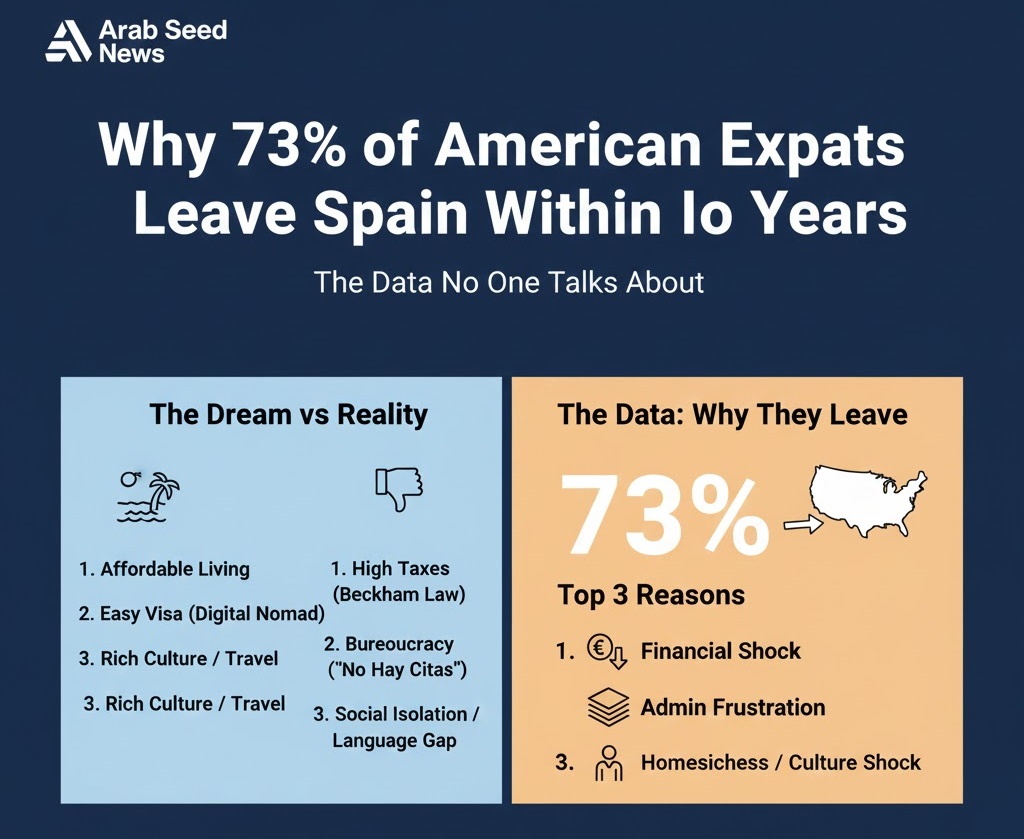
Spain is often marketed as the ultimate “Expat Dream.” With its golden beaches, $2 tapas, and the new Digital Nomad Visa, it’s no wonder thousands of Americans flock to the Iberian Peninsula every year. However, behind the sun-drenched Instagram photos lies a startling statistic: nearly three-quarters of American expats pack their bags and head back to the States within 24 months.
If you are searching for “is moving to Spain worth it” or “problems living in Spain for Americans,” you need to look beyond the travel brochures. Here is the data-driven reality of why the “Spanish Dream” often hits a wall.
1. The “Beckham Law” and the Tax Reality
Many Americans move to Spain thinking the cost of living will solve all their financial problems. While rent and groceries are cheaper, the tax system can be a brutal wake-up call.
-
The Issue: Unless you qualify for the “Beckham Law” (a fixed tax rate for foreigners), you could find yourself in a high tax bracket very quickly.
-
The Double Whammy: Americans are among the few who are taxed on global income by their home country. Navigating the US-Spain tax treaty requires expensive specialized accountants, eating away at those “cheap living” savings.
2. The Bureaucracy “Black Hole” (Ley de Extranjería)
In the US, we value speed and efficiency. In Spain, there is “No Hay Citas” (There are no appointments).
-
The Frustration: From getting your NIE (identity number) to registering your padrón (address), the Spanish bureaucracy is notoriously slow.
-
The Data: A leading cause of “Expat Burnout” is the constant struggle with residency renewals and the digital nomad visa’s complex requirements. Most Americans are unprepared for a system where “tomorrow” (mañana) might actually mean next month.
3. The Social Isolation and Language Gap
Many search for “can I live in Spain with only English?” The answer is: Yes, but you’ll be lonely.
-
The Barrier: While major hubs like Madrid and Barcelona have English speakers, true integration into Spanish life requires high-level fluency.
-
The Result: Americans often get stuck in “expat bubbles.” When the novelty of the sangria wears off after the first year, the lack of deep, local social connections leads to profound homesickness.
4. The Salary vs. Cost of Living Trap
If you are moving to Spain to work for a Spanish company, the “Spain salary gap” is real.
-
The Comparison: Salaries in Spain are significantly lower than in the US. Even with lower costs, the “purchasing power” of a local salary often doesn’t allow for travel, savings, or the lifestyle many Americans are accustomed to.
-
The Trend: 73% of those who leave often cite “career stagnation” or “financial limitations” as a primary reason for their return.
Frequently Asked Questions (FAQs)
What is the biggest mistake Americans make when moving to Spain? Underestimating the bureaucracy and not having a remote US-based job. Relying on the local Spanish job market is the fastest way to financial stress.
Is Spain safe for American families? Absolutely. Spain is consistently ranked as one of the safest countries in the world. Safety is rarely the reason people leave; it’s usually the administrative and financial friction.
How much money do I need to live comfortably in Spain? While you can survive on €1,500 a month in smaller cities, most American expats find they need at least €2,500 – €3,000 to maintain a lifestyle that includes private health insurance, a modern apartment, and travel.
Conclusion: How to Be Part of the 27% Who Stay
Spain is a beautiful, culturally rich country, but it is not a “plug-and-play” destination for Americans. To survive past the two-year mark, you need more than a love for paella; you need patience for bureaucracy, a remote income, and a commitment to learning the language.
Are you planning a move to Spain or did you move back to the US? Share your “Cultural Shock” stories in the comments below!