
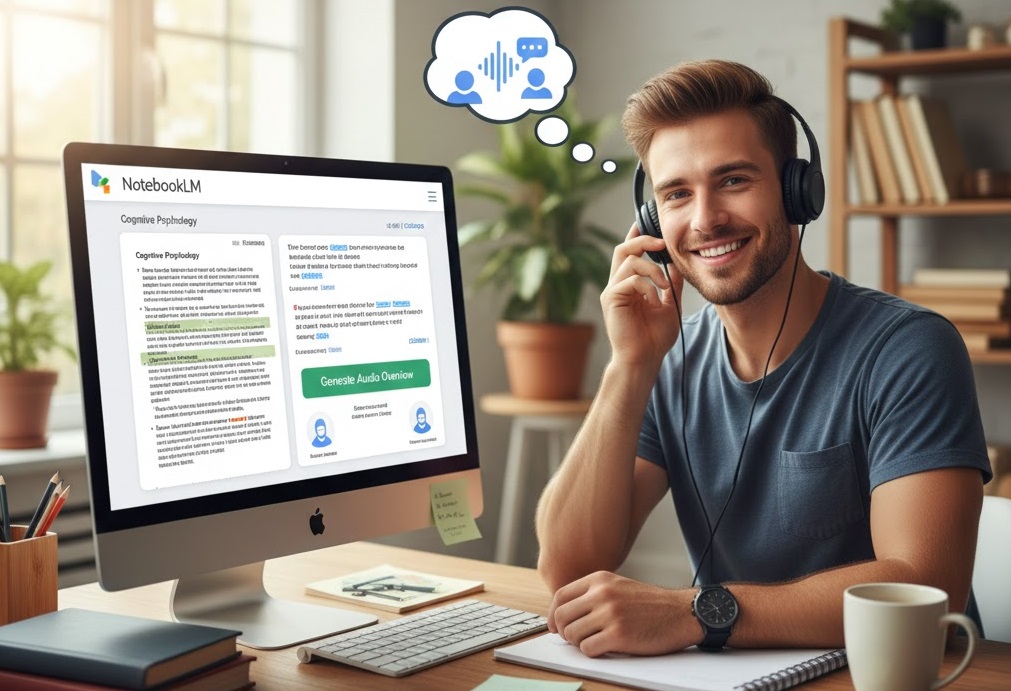
In the world of AI, there’s a lot of “flash in the pan” software that promises to make you a genius overnight. Most of it is fluff. But two years ago, I got early access to a tool called Google NotebookLM (originally Project Tailwind), and I haven’t looked at a textbook, research paper, or PDF the same way since.
If you’re tired of “AI hype” and just want to know if this tool can actually help you master complex subjects, here is my honest, two-year journey with the tool that changed my brain.
What Exactly is NotebookLM? (Beyond the Marketing)
Before we get into the “how,” let’s clarify what it is. Unlike ChatGPT, which pulls information from the entire internet (and sometimes hallucinates), NotebookLM is a personalized AI collaborator. The “LM” stands for Language Model, but the magic is in the “Notebook.” You upload your sources—PDFs, Google Docs, website links, or even YouTube transcripts—and the AI only answers based on that specific data. It’s like having a PhD-level research assistant who has read exactly what you’ve read.
3 Ways NotebookLM Changed My Learning Forever
1. The End of “Information Overload”
We’ve all been there: a 50-page research paper that looks like it’s written in another language. In the past, I’d spend hours highlighting text only to forget it the next day. With NotebookLM, I upload the paper and ask: “Explain the methodology of this study as if I’m 15.” It doesn’t just summarize; it synthesizes. It helps me find the “needle in the haystack” instantly.
2. Fact-Checking Made Instant (The “Source Grounding” Win)
One of the biggest issues with AI is trust. NotebookLM solves this with citations. Every time it gives me an answer, it provides a direct link to the specific paragraph in my uploaded documents. This changed my learning because I stopped worrying about “AI hallucinations” and started focusing on the actual evidence.
3. The Incredible “Audio Overview” Feature
This was the game-changer. NotebookLM can turn your dry notes into a deep-dive podcast conversation between two AI hosts. During my second year of using it, I started generating these “podcasts” from my study guides and listening to them during my morning commute. Hearing two “people” debate my own notes helped me retain information 5x better than just reading.
Common Questions: What You Need to Know
Is NotebookLM Free?
As of now, NotebookLM is a free tool provided by Google. You just need a Google account to access it. Unlike many other AI productivity tools, there isn’t a “pro” paywall for the core features yet.
How is it different from ChatGPT or Claude?
-
ChatGPT: Great for creative writing and general knowledge.
-
Claude: Excellent for long-form analysis.
-
NotebookLM: Specifically designed for learning and research. It stays “grounded” in your files, meaning it won’t ramble about things that aren’t in your notes.
Is my data safe?
Google has stated that the data you upload to NotebookLM is not used to train their public models (like Gemini), which is a huge plus for students and professionals handling sensitive research.
How to Start Using NotebookLM Today (My Workflow)
If you want to try it out, here is the “No BS” workflow I’ve perfected over 24 months:
-
Create a Notebook: Give it a specific name (e.g., “History of the Cold War”).
-
Upload Your Sources: Don’t just upload one file. Upload 5-10 related documents to give the AI a broader perspective.
-
Use the “Study Guide” Tool: Once your files are in, click on the “Notebook Guide” to automatically generate a FAQ, a Table of Contents, or a Study Guide.
-
Ask “Stupid” Questions: Don’t be afraid to ask, “Why does this matter?” or “What is the counter-argument to this author?”
Final Thoughts: Is It Worth It?
After two years, I can confidently say that NotebookLM is the most underrated tool in the Google ecosystem. It hasn’t just made me faster; it has made me smarter by allowing me to interact with information rather than just consuming it.
If you are a student, a researcher, or just a lifelong learner, stop “reading” and start “collaborating” with your notes.
Have you tried NotebookLM yet? Or are you sticking to traditional note-taking apps? Let me know your thoughts in the comments!