
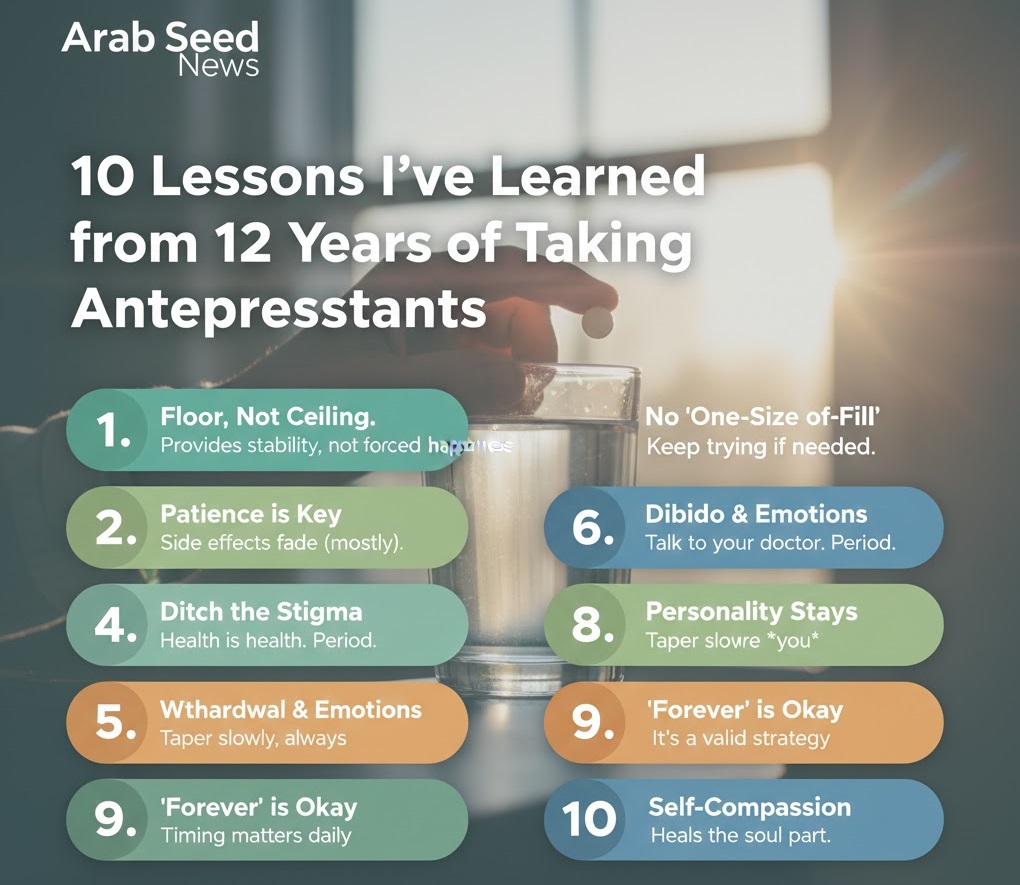
When I first held a small white pill in my hand over a decade ago, I thought it was either a “magic fix” or a “personal failure.” Twelve years later, I know it is neither.
Living with depression and anxiety is a marathon, not a sprint. Over the last twelve years of navigating prescriptions, side effects, and societal stigmas, I’ve learned things that no medical brochure can fully capture. Whether you are considering starting medication or have been on them for years, here is what a decade-plus of experience has taught me.
1. Medication is a Floor, Not a Ceiling
The biggest misconception is that antidepressants will make you “happy.” In my experience, they don’t give you joy; they give you a foundation. They raise the “floor” of your mood so that you aren’t constantly falling into a bottomless pit, allowing you the stability to do the actual work of therapy, exercise, and connection.
2. The “Side Effect” Phase is a Test of Patience
The first 4 to 6 weeks are often the hardest. I’ve dealt with dry mouth, vivid dreams, and “brain zaps.” It’s frustrating because you feel worse before you feel better.
-
The Lesson: Hang in there. Most (though not all) side effects level off once your brain adjusts to the new chemical baseline.
3. There is No “One-Size-Fits-All”
I didn’t find the right medication on the first try. Or the second. Different bodies react differently to SSRIs, SNRIs, or atypical antidepressants.
-
The Lesson: If the first one doesn’t work, it’s not a sign that you are “unfixable”—it just means the chemistry wasn’t a match.
4. The Stigma is Real, But It’s Not Yours to Carry
For years, I felt I had to hide my pill organizer. I felt “weak” for needing a chemical crutch.
-
The Reality: We don’t shame a diabetic for needing insulin or someone with a broken leg for using crutches. Mental health is health. Period.
5. Your Libido and Emotions Might Change
Long-term use can sometimes lead to “emotional blunting”—where the lows aren’t as low, but the highs aren’t as high either. Similarly, physical intimacy can become more difficult.
-
The Lesson: These are valid trade-offs. Talk openly with your doctor; often, a small dosage adjustment can bring back your “spark.”
6. “Brain Zaps” and Withdrawal are No Joke
If I miss a dose by even a few hours, I feel it. Transitioning off or switching medications requires a very slow, medically supervised taper.
-
The Lesson: Never, ever go “cold turkey.” Your brain needs time to recalibrate.
7. It Doesn’t Change Your Personality
One of my biggest fears was that I would stop being “me.” I feared losing my creativity or my edge.
-
The Truth: I found that I am actually more myself when I’m not paralyzed by anxiety. I’m a better writer, a better friend, and a better partner when I’m not drowning.
8. The Goal Doesn’t Have to Be “Getting Off” Them
We live in a culture obsessed with “tapering off.” While many people use antidepressants as a temporary bridge, some of us have brain chemistry that simply functions better with long-term support.
-
The Lesson: Being a “lifer” is not a failure. It’s a management strategy for a chronic condition.
9. Routine is Your Best Friend
Taking your medication at the exact same time every day matters. It keeps the levels in your bloodstream steady and prevents the “rollercoaster” effect.
-
The Lesson: Link it to a habit you already have, like brushing your teeth or your morning coffee.
10. Self-Compassion is the Ultimate Healer
The medication handles the chemistry, but you have to handle the soul. Twelve years later, I’ve learned that the pill works best when paired with radical self-acceptance and a lot of grace for the days that are still hard.
Common Questions: Long-Term Antidepressant Use
Do antidepressants stop working over time? Sometimes. This is often called “Prozac Poop-out” (tachyphylaxis). If you feel your symptoms returning after years of stability, it’s time to talk to your psychiatrist about an adjustment.
Will I be on them forever? Not necessarily. Many people use them to get through a specific life crisis. Others stay on them long-term. Both paths are valid and depend entirely on your unique needs.
Can I drink alcohol while on antidepressants? Most doctors advise against it or suggest extreme moderation. Alcohol is a depressant, which can counteract the medication and increase side effects like drowsiness.
Final Thoughts: A Journey Toward Peace
If you are struggling today, please know that seeking help is the bravest thing you can do. Antidepressants aren’t a “easy way out”—they are a tool in your toolkit. After 12 years, I don’t regret a single day of choosing to stay.
Have you had a similar experience or are you just starting your journey? Let’s talk in the comments—this is a safe space for sharing.