
By: Arab Seed News Editorial Team
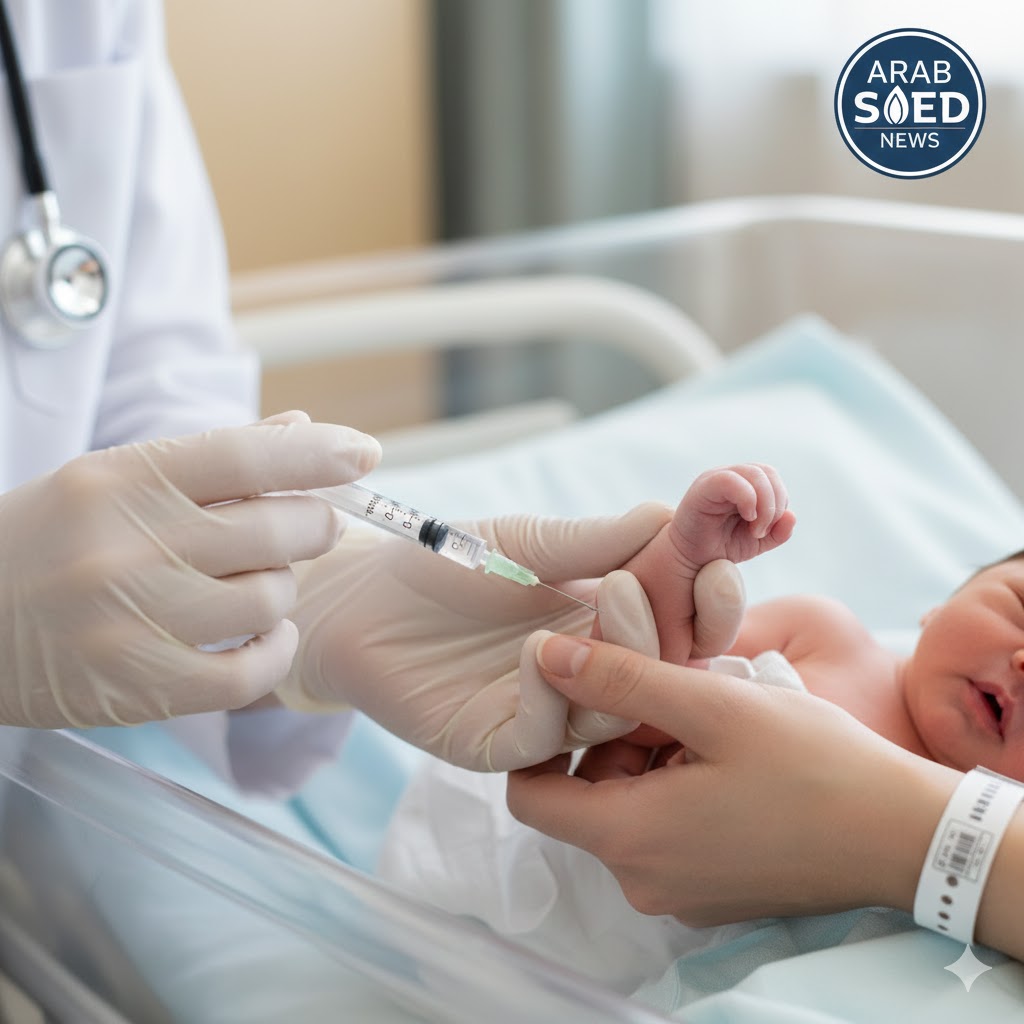
A large number of frontline healthcare providers and medical organizations are grappling with a challenge they haven’t had to face in many years: how to protect newborns from the Hepatitis B virus. This challenge arises after a federal advisory panel reversed its decades-long standing recommendation for universal vaccination of all newborns at birth.
Instead of blanket vaccination, the Advisory Committee on Immunization Practices (ACIP) decided to rely primarily on the mother’s test results for the virus during pregnancy. The new recommendation states that babies of women who test positive should still be vaccinated shortly after birth, but if the result is negative, parents should decide on whether and when to vaccinate the child in consultation with their healthcare provider.
This shift has sparked widespread concern in the medical community, as many doctors view relying on testing alone as an approach that failed in the past, recalling a time when the US still saw thousands of cases annually among children.
The Risk of Returning to the Past: Testing Alone Does Not Protect
Although universal vaccination was the standard, universal Hepatitis B testing during pregnancy remained a crucial part of prenatal care for decades. However, the new ACIP decision significantly increases the pressure on the testing process, effectively making testing bear the entire burden of prevention.
Dr. James Campbell, a pediatrician and vice chair of the American Academy of Pediatrics’ (AAP) Committee on Infectious Diseases, strongly cautioned against this approach: “My worry is that more Americans will believe we no longer need to pay attention to hepatitis B in children, and we will return to the time when many babies and young children were infected every year.”
Why Isn’t Testing Alone Sufficient?
-
Gaps in Care: Some women may not receive prenatal care at all, or may not have access to testing.
-
False Results: The test result may be falsely negative, or the mother might become infected after the initial test is performed.
-
Post-Birth Transmission: As Dr. Michael Warren, Chief Medical and Health Officer for the March of Dimes, explained, prenatal testing focuses only on mother-to-baby transmission, and fails to account for exposure cases after birth from other caregivers or other sources.
“The Ultimate Safety Net”: Why the Birth Dose is Essential
Hepatitis B is a serious viral infection that attacks the liver. While many adults recover from acute infection, its progression to chronic infection is extremely common in children. An estimated 90% of infants infected at birth remain chronically infected, significantly increasing the risk of liver cancer, cirrhosis, and organ failure later in life.
Dr. Steven Fleischman, President of the American College of Obstetricians and Gynecologists (ACOG), expressed concerns that the panel’s message might minimize parents’ worries: “Even though you’re low-risk, you’re not no risk. Even if there’s a minute risk that this could impact your baby, why wouldn’t you get this vaccine, which has for years been shown to be very safe?”
Dr. Warren described the initial birth dose as “the ultimate safety net.” It provides protection against exposures that may occur after birth, such as contact with blood or body fluids from an unknowingly infected adult caregiver.
The Historical Success of the Universal Vaccination Strategy
The US initially relied on a “high-risk vaccination” strategy in the 1980s, but it failed to control the infection. As a result, the strategy evolved by 1991 to include the universal vaccination of all children at or shortly after birth.
Data from the Centers for Disease Control and Prevention (CDC) indicates that the national coverage rate for the Hepatitis B vaccine among infants rose from 16% in 1993 to 90% by 2000.
Crucially, research has shown that after the birth dose vaccination strategy was introduced, the incidence of Hepatitis B infections among infants and young children dropped by 99%, decreasing from approximately 16,000 cases annually in the early 1990s to fewer than 20 cases in recent years.
This enormous success is what drives major organizations like the American Academy of Pediatrics (AAP) and the American College of Obstetricians and Gynecologists (ACOG) to continue recommending that all babies receive the Hepatitis B vaccine on their first day of life, even if their mothers’ test results were negative.
Related posts:
 Alarming Spread: Over 250 Quarantined in South Carolina as Measles Outbreak Rages
 Beyond Separate Diagnoses: Massive DNA Study Unlocks 5 Shared Genetic Clusters of Psychiatric Disorders
 A Deep Dive into America’s Newborn Hepatitis B Vaccine Controversy: Politics, Science, and a Nation Divided
 Danish Sperm Bank Sold Cancer-Linked Genes Across Europe: The Full Story