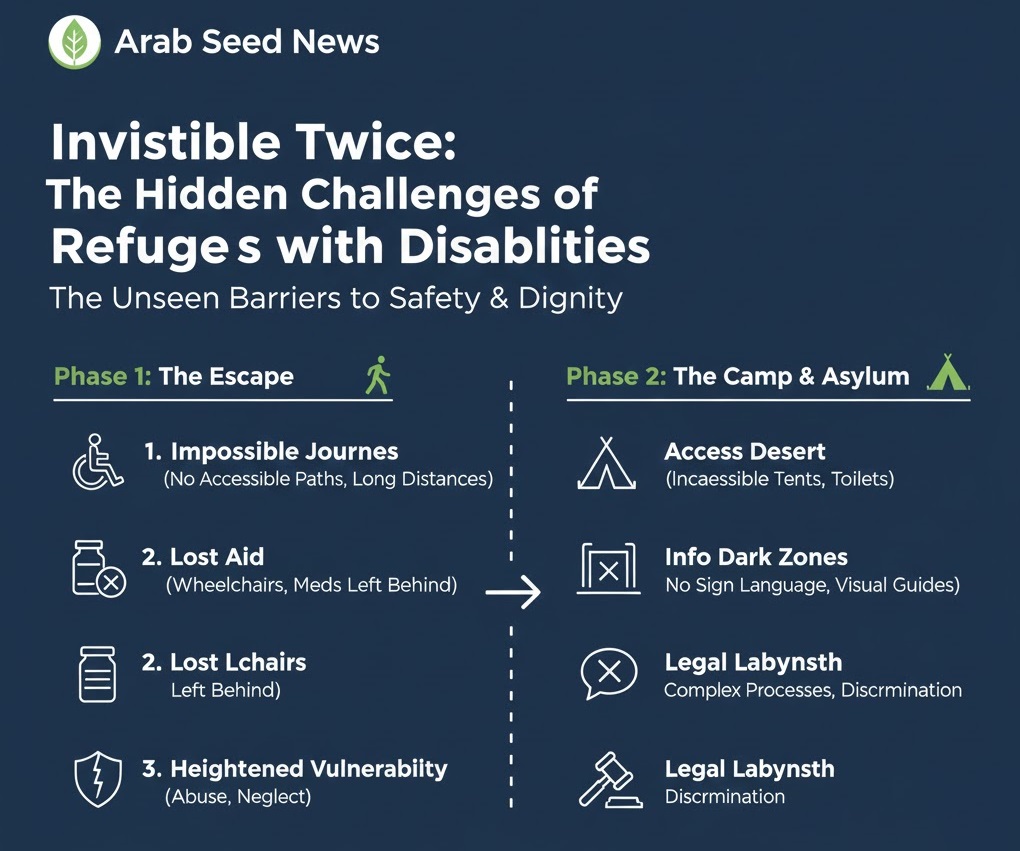
When we think of the global refugee crisis, the images that often come to mind are of long marches, crowded boats, and tent cities. But there is a group within this tragedy that often remains unseen and unheard: refugees with disabilities. For these individuals, the journey is not just a search for safety; it is an obstacle course where the world is literally not built for them. They are often “invisible twice”—once as refugees displaced from their homes, and again as people with disabilities whose specific needs are ignored in the chaos of humanitarian aid.
1. The “Accessibility Gap” in Refugee Camps
Many people search for “life in refugee camps” without realizing that for a person with a physical or sensory disability, a camp can be a prison.
-
The Infrastructure Barrier: Most temporary shelters, latrines, and food distribution points are not wheelchair accessible. Uneven terrain and lack of paved paths make independent movement impossible.
-
Communication Barriers: For the deaf or hard of hearing, vital information about safety, medical care, or legal rights is often shared via megaphones or un-captioned videos, leaving them in the dark during emergencies.
2. The Loss of Assistive Devices
In the rush to escape conflict, many are forced to leave behind wheelchairs, hearing aids, or medication.
-
The Impact: Without these tools, a refugee’s world shrinks. A child who cannot walk may be carried for miles by an elderly parent, or a person with a visual impairment may become entirely dependent on others, increasing their vulnerability to abuse.
-
SEO Insight: Queries for “medical aid for refugees” often overlook the desperate need for specialized prosthetic and orthotic services in conflict zones.
3. The Struggle for Legal Recognition and Asylum
Seeking asylum is a complex bureaucratic process. For those with cognitive or intellectual disabilities, the challenges are magnified.
-
The Process: Interviews with immigration officials can be traumatizing and difficult to navigate without proper accommodations or advocates.
-
The Rejection Risk: Some host countries have “health requirements” that can unfairly penalize refugees with chronic conditions or disabilities, leading to a higher rate of asylum denials for those who need protection the most.
How Can Humanitarian Aid Do Better?
If you are looking for “how to help refugees with disabilities,” the solution lies in Inclusion by Design.
-
Meaningful Participation: Aid organizations must consult with disabled refugees when designing camps. Nothing about them, without them.
-
Data Collection: We cannot help what we do not measure. Identifying people with disabilities early in the registration process is key to ensuring they receive targeted support.
-
Inclusive Education: Ensuring that refugee schools are equipped to handle children with special educational needs is vital for the long-term success of displaced families.
Frequently Asked Questions (FAQs)
How many refugees have a disability? The UNHCR estimates that roughly 15% of the world’s displaced population lives with a disability, though this number is likely higher due to under-reporting and the trauma-induced injuries sustained during flight.
What are the most common disabilities among refugees? They range from physical mobility issues and sensory impairments (blindness/deafness) to “invisible” disabilities like severe PTSD and cognitive impairments caused by war-related trauma.
Can a refugee with a disability be resettled? Yes, but they are often categorized as “vulnerable cases.” While this can speed up the process, it also requires finding a host country with the specific medical infrastructure to support them.
Conclusion: Dignity is Not Optional
Being a refugee is a status; being disabled is an identity. Neither should mean a loss of human rights. To truly address the global displacement crisis, we must ensure that our help reaches the person in the back of the tent, the child who cannot hear the sirens, and the elderly man who cannot walk to the food line.
True success in humanitarian work isn’t just about saving lives—it’s about restoring the dignity of every individual, regardless of their physical or mental ability.
Are you working with or supporting inclusive humanitarian programs? Let’s highlight the best practices in the comments below to raise awareness.