Most people approach their professional life by looking at what’s available right now. They browse job boards, see what fits their current skills, and apply. But this “forward-moving” approach often leads to a “career plateau”—a place where you are comfortably bored and far from your true potential.
If you are searching for “how to find my passion” or “how to plan a career path,” it’s time to stop looking forward and start looking backward. This is called Reverse Engineering Your Career.
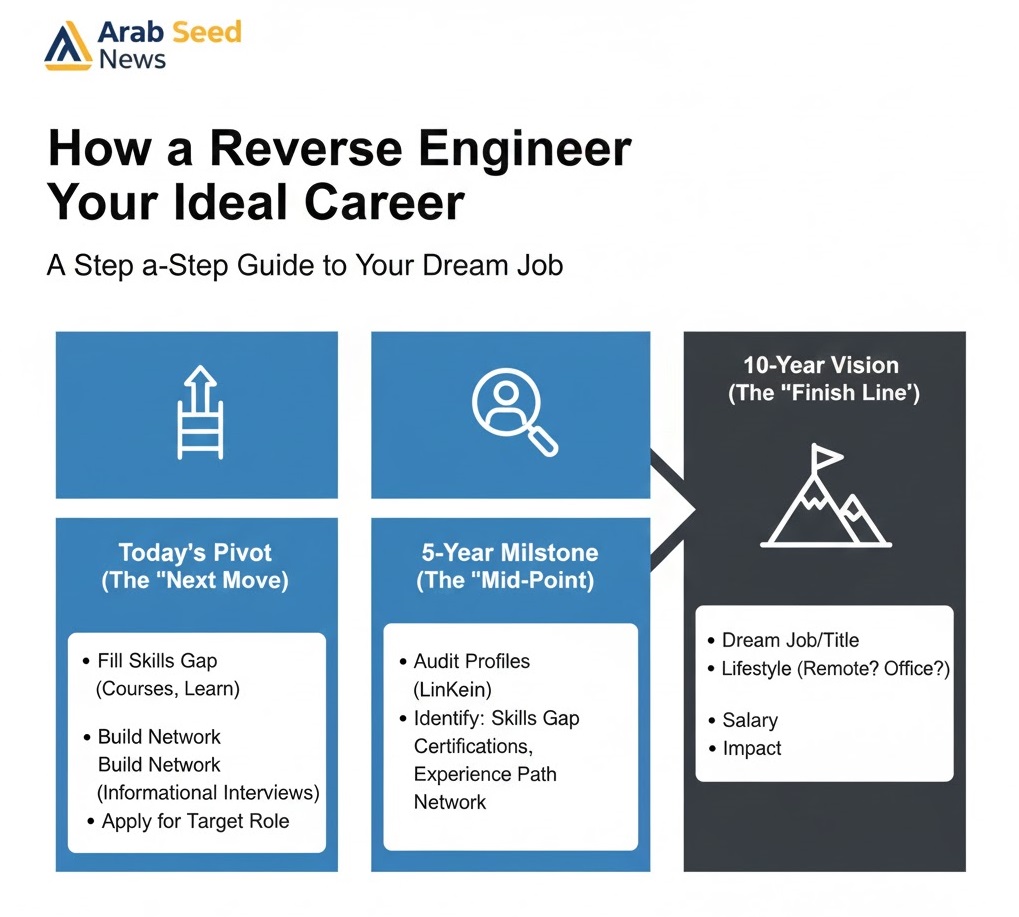
1. Define the “Final Scene” (The 10-Year Vision)
Reverse engineering starts at the finish line. Don’t think about your next job; think about your last job.
-
The Visualization: Where are you sitting in 10 years? Are you leading a global team, running a solo creative studio, or working in a niche tech field?
-
The Lifestyle: Do you want a “remote work lifestyle” or a high-powered corner office?
-
The SEO Insight: People who search for “career goal setting” often fail because their goals are too vague. Be specific about the title, the salary, and the daily tasks.
2. Identify the “Gatekeepers”
Once you have the dream role, look at the people who currently hold it. Use LinkedIn to “audit” their profiles.
-
The Skills Gap: What certifications do they have? (e.g., PMP, AWS, Google Analytics).
-
The Experience Path: Did they start in sales? Did they go to grad school?
-
The Hack: Look for the “mid-level” role they held 5 years ago. That is your immediate target.
3. Work Backward to the “Next Best Move”
Now that you know the 10-year goal and the 5-year mid-step, you can identify the “pivot point” you need today.
-
If you need a new skill: Look for “best online courses for [Industry]” to bridge the gap quickly.
-
If you need a network: Start “informal interviewing.” Reach out to people in your target field not for a job, but for advice. This is a top-tier strategy for “hidden job market” networking.
4. The Three-Column Strategy
To make this practical, create a table to visualize your reverse engineering:
| The Ultimate Goal | 5-Year Milestone | The Move to Make Today |
| Example: CTO of a Fintech Startup | Senior Software Architect | Learn Blockchain or AI Integration |
| Example: Published Best-selling Author | Freelance Journalist | Start a Niche Blog or Substack |
Frequently Asked Questions (FAQs)
What if I don’t know what my “ideal career” is?
Search for “career ikigai.” It’s a Japanese concept that helps you find the intersection of what you love, what you’re good at, what the world needs, and what you can be paid for.
Is it too late to reverse engineer a career at 40?
Absolutely not. In fact, “mid-life career changes” are more successful because you have “transferable skills.” You aren’t starting from scratch; you’re starting from experience.
How do I stay motivated during the process?
Focus on “micro-wins.” If your goal requires a degree, the micro-win is simply signing up for the first class.
Conclusion: Stop Waiting for “The Call”
Your ideal career isn’t something you find; it’s something you build. By reverse engineering your path, you take the guesswork out of your professional life. You stop being a passive applicant and start becoming a strategic architect of your own success.
What is the one dream job you’ve always been afraid to chase? Tell us in the comments, and let’s figure out the first backward step together!