Have you ever looked at your life—your job, your health, your relationships—and realized that on paper, everything is “fine,” yet you feel completely hollow inside? You find yourself searching for “why do I feel unhappy for no reason” or “how to enjoy things again.” It’s a frustrating and lonely place to be. You feel guilty because you have “nothing to complain about,” yet the color seems to have drained out of your world. The truth is, your inability to enjoy life often has nothing to do with your external circumstances and everything to do with your internal “operating system.”
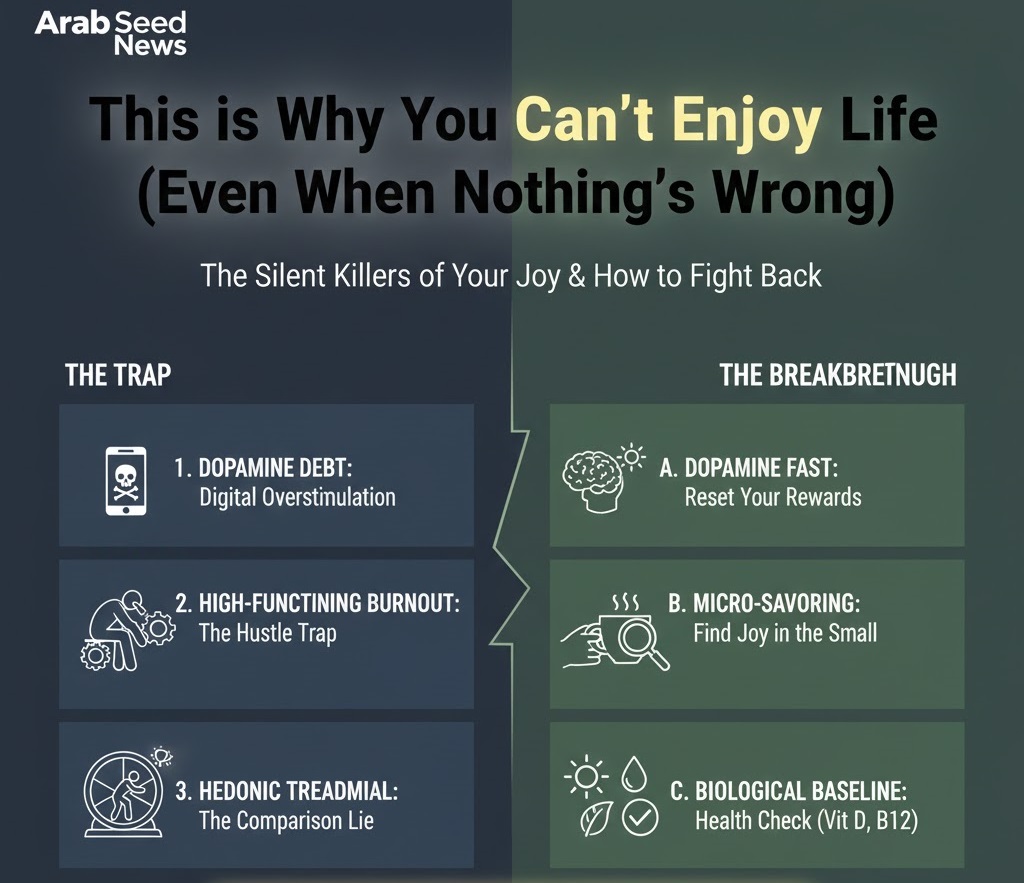
1. The Dopamine Debt (Digital Overstimulation)
We live in an age of constant stimulation. If you spend your day scrolling through short-form videos, checking notifications, and switching between apps, you are constantly “spending” your dopamine.
-
The Problem: When your brain is constantly flooded with high-intensity digital pleasure, normal life (like a sunset or a conversation) feels boring by comparison.
-
The Result: You develop a “high tolerance” for joy, meaning you need more and more stimulation just to feel “baseline.”
2. High-Functioning Burnout
Many people searching for “symptoms of burnout” don’t realize they are already in it. Burnout isn’t always about being unable to get out of bed; sometimes, it’s about being able to do everything except feel.
-
The Mechanism: When your nervous system is in a state of chronic “fight or flight” due to work or stress, it eventually shuts down your “thrive” systems to save energy for “survive” systems.
-
The Sign: You can still perform your duties at work, but you’ve lost the capacity for play and spontaneity.
3. The “Hedonic Treadmill” and Constant Comparison
In a world of social media, we are constantly measuring our “behind-the-scenes” against everyone else’s “highlight reel.”
-
The Trap: You believe that you will finally be happy when you get that promotion, when you lose ten pounds, or when you move to a new city.
-
The SEO Insight: This is known as “Arrival Fallacy.” If you can’t find joy in the present, your brain will simply move the goalposts once you reach your next milestone.
Practical Steps to Start Feeling Again
If you want to know “how to fix emotional numbness,” start with these three science-backed shifts:
A. Try a “Dopamine Fast”
Set aside one day—or even just four hours—where you have zero digital input. No phone, no music, no TV. This allows your brain’s receptors to reset, making the “small things” in life feel rewarding again.
B. Practice “Micro-Savoring”
Don’t wait for a vacation to be happy. Practice savoring a single cup of coffee or the feeling of the sun on your skin for 60 seconds. This builds the “muscle” of appreciation.
C. Check Your Physical Health
Sometimes, the reason you can’t enjoy life is physiological. Low levels of Vitamin D, B12, or iron can mimic the symptoms of depression and low mood.
Frequently Asked Questions (FAQs)
Is it normal to feel “numb” even if I’m not depressed? Yes. This state is often called Anhedonia. It can be caused by stress, lack of sleep, or even a diet high in processed sugar. It is your brain’s way of saying it is overwhelmed.
How do I stop feeling guilty for not being happy? Guilt is an “energy thief.” Accept that your feelings are a biological signal, not a moral failure. Once you stop fighting the feeling, it often begins to lift.
When should I see a professional? If your lack of enjoyment lasts for more than two weeks and is accompanied by changes in sleep, appetite, or thoughts of self-harm, please reach out to a mental health professional.
Conclusion: Reclaiming Your Joy
Joy isn’t a destination you arrive at; it’s a frequency you tune into. If you can’t enjoy life right now, don’t panic. Your “joy receptors” aren’t broken—they’re just tired. By slowing down, disconnecting from the noise, and giving yourself permission to just be, you can slowly bring the color back into your world.
What is one small thing that used to bring you joy? Let’s talk about it in the comments below.