Have you ever tried to touch your toes only to feel like your back and legs are made of solid wood? Or perhaps you’ve seen viral videos of people performing complex “mobility flows” and felt completely overwhelmed, having no clue where to start?
Don’t worry; you aren’t alone. Thousands of people search every month for “how to start mobility training” or “difference between flexibility and mobility.” In this guide, we’re stripping away the jargon to give you a clear starting point—even if you have zero experience.
First: Flexibility vs. Mobility (What’s the Difference?)
Before you start, it’s vital to understand this fundamental distinction that many people get wrong:
-
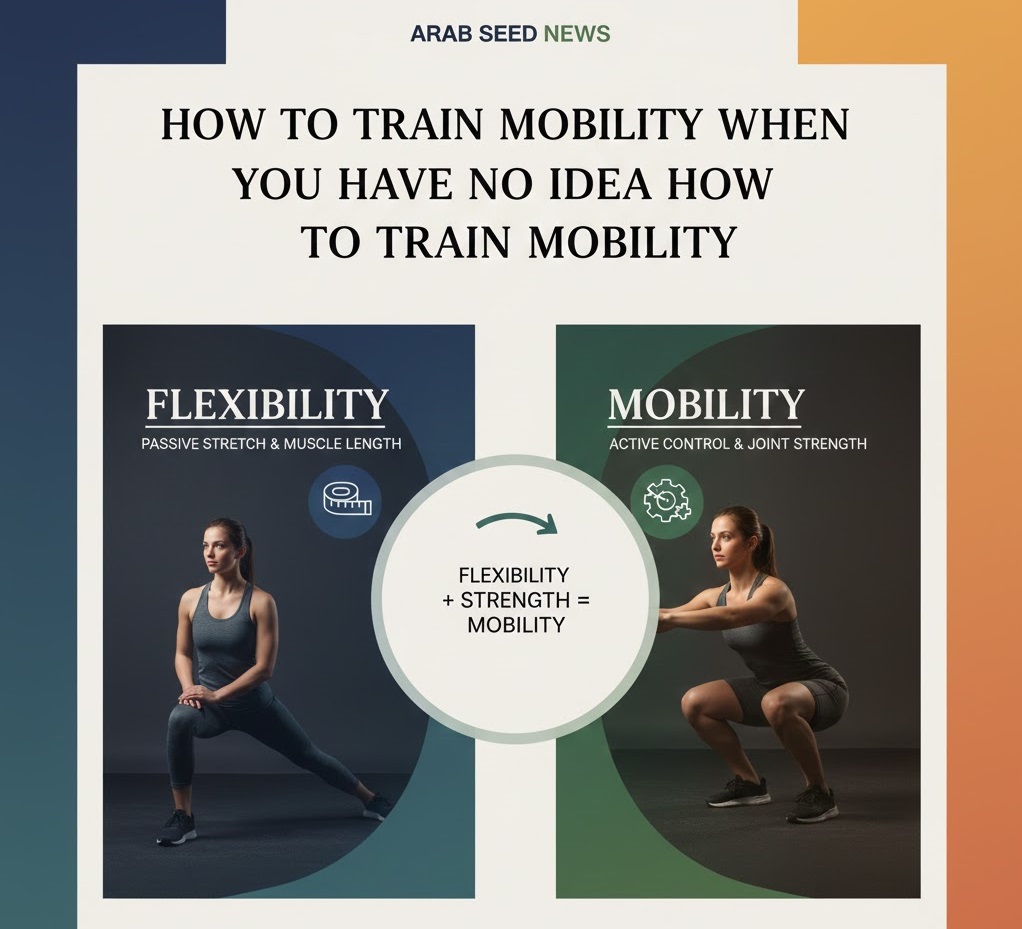
Flexibility: The ability of your muscles to stretch passively (like someone pushing your leg further into a stretch).
-
Mobility: The ability to move a joint through its full range of motion with control and strength.
In short: Flexibility is how “stretchy” you are; Mobility is how “free and strong” you are in your movements.
How to Start with Zero Clue (The 3-Step Plan)
You don’t need expensive equipment or hours of free time. If you’re asking “how to train mobility at home,” follow these simple rules:
1. Focus on the “Big Three” Joints
Instead of trying acrobatic poses, focus on the three areas responsible for 80% of body stiffness and aches:
-
Shoulders & Neck: To undo the damage of sitting at a desk all day.
-
Hips: The “tension warehouse” of the body; freeing your hips often provides instant relief for lower back pain.
-
Ankles: Essential for healthy walking, running, and proper squatting form.
2. The “5-Minute Daily” Rule
The biggest mistake beginners make is trying to do a 60-minute mobility session.
-
Pro Tip: Pick just two movements (like the Cat-Cow or a Deep Squat hold) and do them for 5 minutes every morning. Consistency beats intensity every single time.
3. Move Slowly and Intentionally
In mobility training, speed is your enemy. You need to feel every “corner” of the movement. If you are looking for “mobility exercises for beginners,” look up “Slow Controlled Articular Rotations” (CARs). It’s a fancy name for simply moving your joints in slow, large circles.
Why Should You Care? (The Benefits)
People often search for “benefits of functional mobility,” and here is what you actually get:
-
Reduced Joint and Back Pain: Most aches are simply the result of “rusty” or stiff joints.
-
Better Athletic Performance: You will jump, run, and lift with more power and fewer injuries.
-
Feeling “Light”: You’ll lose that heavy, “clunky” feeling in your body when you get out of bed in the morning.
Frequently Asked Questions (FAQs)
Is mobility training supposed to hurt? You should feel a “challenging” or “productive” stretch, but never sharp pain. If it hurts, stop immediately and reduce the range of motion.
How often should I train mobility? Because mobility is like “greasing the hinges” of your joints, daily movement is best. Think of it like brushing your teeth, but for your joints.
Do I need a personal trainer? While helpful for injuries, you can start with reputable YouTube channels focusing on “Mobility for beginners.” However, if you have pre-existing injuries, consulting a professional is a must.
Conclusion: Your Future Self Will Thank You
Mobility training isn’t magic; it’s a long-term investment in your quality of life. Don’t wait until you’re in pain to start moving. Start today, even if it’s just one movement.
Do you feel “stuck” in a specific part of your body? Let us know in the comments, and we’ll suggest a simple move to help free it up!