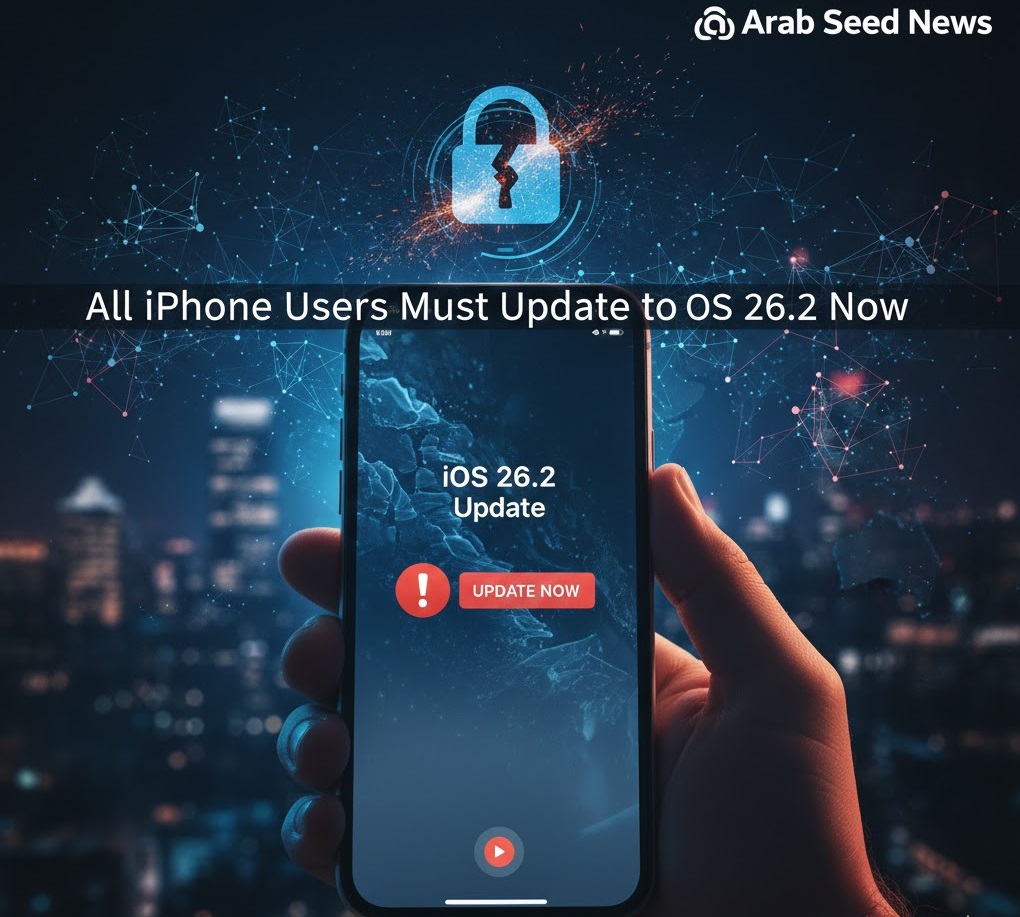
By Arab Seed News
In a stark reminder that no operating system is impervious to attack, Apple has issued an urgent security warning: two critical zero-day vulnerabilities in the iPhone’s core browser engine, WebKit, have been actively exploited in the wild.
The tech giant has rushed out the fix in iOS 26.2, released today. While this update is mandatory for all users, the warning is particularly severe for anyone running older software, as the most sophisticated attacks specifically targeted individuals “on versions of iOS before iOS 26.”
Apple is urging all users to upgrade immediately. Delaying this update opens the door to devastating, chained attacks.
I. The Anatomy of the Exploit: WebKit Under Siege
The two exploited vulnerabilities, identified as CVE-2025-14174 and CVE-2025-43529, are both rooted in WebKit, the rendering engine underpinning every browser on the iPhone, including Safari.
According to Apple’s disclosure, these flaws carry the signature of a devastating spyware campaign:
-
CVE-2025-14174: A memory corruption flaw that can lead to arbitrary code execution simply by processing maliciously crafted web content in the browser.
-
CVE-2025-43529: A vulnerability that allows for memory corruption, which security experts believe is chained with the first flaw.
This chaining—where one vulnerability is used to gain an initial foothold and the second to escalate privileges and execute code—is the hallmark of modern, sophisticated surveillance campaigns. Experts like Mayuresh Dani from Qualys confirmed that WebKit has a “well-documented history of serving as the primary entry point for sophisticated spyware and surveillance campaigns,” including infamous programs like Pegasus.
II. Beyond the WebKit Flaws: The Wider Risk
The iOS 26.2 release patches a total of eight WebKit threats alone, but the risk extends far beyond the browser.
Two other critical issues addressed in this update highlight the potential for widespread damage:
-
Critical Kernel Issue (CVE-2025-46285): An integer overflow bug in the Kernel could have allowed a malicious app to gain root privileges (full control over the device). The fix involved adopting 64-bit timestamps to prevent this privilege escalation.
-
App Store Flaw (CVE-2025-46288): A serious flaw that could have allowed malicious apps to access sensitive user data, including financial payment tokens. This has been corrected with stricter permission controls.
These vulnerabilities are not theoretical; they represent real-world exposure. As James Maude from BeyondTrust warns, because Apple requires all iOS browsers and many apps to use the WebKit engine, it creates a “single inherent point of failure.” If WebKit is vulnerable, your entire device is vulnerable when viewing online content.
III. Urgent Action Required for All iPhone Users
While these attacks were initially highly targeted, security experts agree that the patches’ public release exponentially increases the risk for everyone. The exploited flaws will “quickly become a must-have exploit for a range of threat actors,” Maude warns.
Mandatory Security Practices:
The only immediate and effective defense is to install iOS 26.2 immediately. Darren Guccione from Keeper Security states clearly: “There’s no workaround or user behavior that meaningfully mitigates this risk. Installing the update is the only effective defense.“
For ongoing operational security, users should also:
-
Enable iCloud Private Relay: To mask your IP address and encrypt DNS queries, adding a vital layer of privacy.
-
Practice Private Browsing: Utilize private browsing modes and consider temporarily disabling JavaScript when navigating untrusted websites.
The disclosure of these simultaneous zero-day attacks across both iOS and Android (which also saw an emergency patch this month) confirms that the mercenary spyware industry is aggressively targeting both major operating systems. The key difference remains speed: while Pixels were patched quickly, other Android OEMs (like Samsung) face inherent delays in rolling out fixes.
For Apple users, the solution is simple and immediate: Do not delay your update.